Share on LinkedIn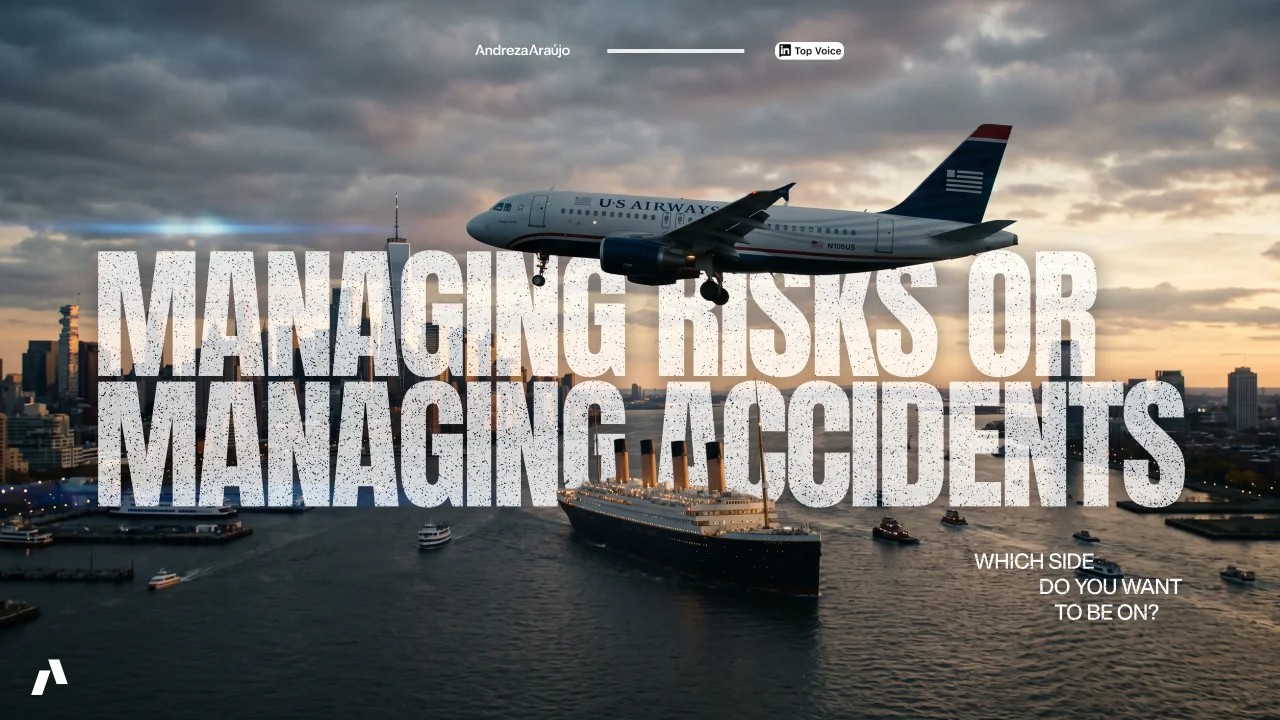
There are leaders who manage the accident after it happens. And there are leaders who manage risks before they find a way to become a tragedy.
This may be one of the most important questions for any leader, whether on the frontline or in senior management. Am I leading before or after the accident?
I have been reflecting on two powerful stories known around the world. It is worth mentioning that these events took place 96 years apart. Yet, even today, they invite us into a deep reflection on leadership and safety.
I am referring to Captain Edward Smith, of the Titanic, and Captain Chesley "Sully" Sullenberger, of US Airways Flight 1549, which landed on the Hudson River.
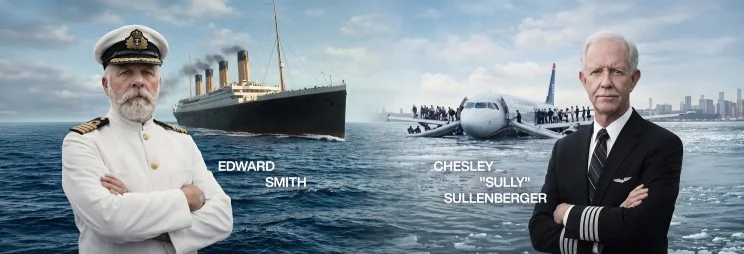
The Titanic: Ignored Signals and Accident Management
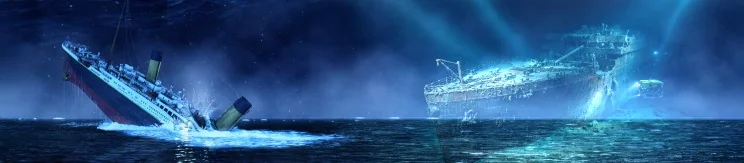
The Titanic did not sink simply because it struck an iceberg. Before the collision, there were signs. There were messages. There was information about ice along the route. There was an operational condition that called for more caution, more questioning and more discipline. The problem was not only in the moment of impact. The problem was in what happened before it. Signals were received, but they were not turned into a sufficient change in operational behavior. They were met by an operational culture that accepted maintaining high speed in clear weather, even in the face of ice warnings, combined with the expectation of fast crossings.
After the ship collided with the iceberg, leadership began managing the accident. Sending distress calls, organizing evacuation, lowering lifeboats, dealing with panic, loss of control, limited time and lives at risk. But at that point, prevention had already missed its greatest opportunity.
This is the picture of accident management... when the organization only mobilizes energy, intelligence, communication and urgency after the damage has already begun.
The Hudson River: Preparation and Risk Management
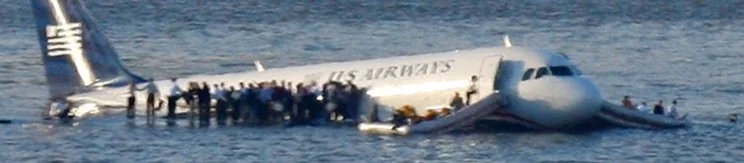
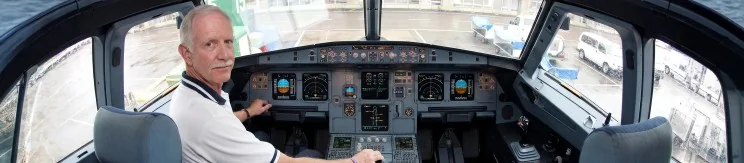
The Hudson River case gives us another perspective. In 2009, US Airways Flight 1549 lost thrust in both engines after a bird strike shortly after takeoff. Captain Sully and his crew had very little time to recognize the aircraft's actual condition, assess alternatives and make a decision. He did not have time for long meetings, to consult committees or to build a perfect plan. But he had something many leaders underestimate, preparation, experience, discipline, situational awareness and the ability to assess risks in real time.
The decision to land on the Hudson River was not an emotional gamble. It was a choice based on risk. Returning to the airport seemed like a possible option in theory, but it could have exposed passengers, crew and people on the ground to an even greater consequence. The river, although an extreme alternative, became the most viable mitigation measure considering the energy, altitude, speed, time available and actual condition of the aircraft.
This is the essence of safety leadership. To convey safety with competence, character, courage, curiosity and care in order to make the right choice. Fundamentally, it is about managing risks and making choices using the right inputs.
The Reflection: Culture and Signals
The difference between the two cases is not about labeling one captain as good and the other as bad, but about a deeper reflection on culture and preparation. The Titanic illustrates the danger of an organizational culture that normalizes weak signals and gives in to pressure. It is the picture of an operation swallowed by the expectations of senior leaders who ignore risks in favor of goals and desires. The Hudson, on the other hand, demonstrates the strength of leadership that turns technical preparation and discipline into life saving decisions under extreme pressure.
What do we need to do? We need to recognize signals, regardless of their intensity.
Weak Signals and Strong Signals
Weak signals are the warnings that have not yet become an accident. A near miss, a repeated deviation, an ignored procedure, postponed maintenance, deadline pressure, a poorly prepared work permit, a tired team, a removed protection, an unverified lockout, a safety conversation held only as a checklist exercise.
Strong signals are those that arrive with pain. An accident, serious injury, leave of absence, disability, fatality, explosion, fire, fall, amputation, rollover or loss of containment.
The problem is that many organizations only respect strong signals. They only believe in risk when it has already become a statistic. They only stop when someone gets hurt. They only investigate deeply when there is blood, loss or reputational exposure.
The Role of Leadership in Risk Management
But leaders who manage risks think differently. They do not only ask, "Did anyone get hurt?" They ask, "What is the worst thing that could happen here and has never happened? Which control almost failed?" They do not only ask, "Was the target achieved?" They ask, "What risk was normalized so the target could be achieved? Should the green indicator be celebrated or challenged?" They do not only ask, "Does the procedure exist?" They ask, "Is the procedure practical, known, verified and respected in the field?"
Senior management manages risks when it defines priorities, budget, deadlines, targets, resources, maintenance, hiring, engineering and tolerance for deviation. Every day, it chooses whether the organization will operate with a safety margin or at the edge of luck.
The immediate leader manages risks when they are close to the task. When they verify critical controls before the activity begins. When they listen to the worker. When they take a near miss seriously. When they do not accept improvisation as a permanent solution. When they stop the activity before the activity stops a life.
Operational Discipline: The Essential Link
Operational discipline is the link between knowing and doing. Many companies know what their critical hazards are. They know where their dangerous energies are. They know which tasks have the potential to cause serious or fatal injury. They know which controls should be in place. But knowing is not enough.
A critical control that is not verified is only an intention. A procedure that is not practiced is only paper. An indicator that does not lead to a decision is only a report. A meeting that does not change behavior is only an information agenda.
Managing risks requires the discipline to keep the obvious working every day. It requires the courage to stop an operation before tragedy occurs. It requires the humility to listen to weak signals and the maturity to understand that the absence of accidents does not guarantee the presence of effective controls.
Conclusion
The Titanic reminds us that ignored signals can become history. The Hudson reminds us that preparation, discipline and decisions based on risk can save lives.
In the end, the question remains for every leader.
- Do you want to be remembered for how you managed chaos after everything went wrong?
- Or for how you managed risks before they had the chance to become an accident?
Because leading safety is not only about reacting heroically on the worst day. It is about tirelessly building the conditions so that today's activity is not the last.
Watch my Headline Podcast
Would you like to learn more about my work? Purchase my books at the links below.
- Safety Leadership: http://bit.ly/44kFy2Z
- Antifragile Leadership: http://bit.ly/4ni6kBM
- 80 Ways to Expand Risk Perception: https://amzn.to/3VbWlAV
- Safety Culture: https://bit.ly/3x8IDXm
- Safety Culture Diagnosis: https://amzn.to/3XfnBkt
🧠 Follow me, Andreza Araújo , for more on EHS and leadership.
♻️ Repost this if you think it can help someone in your network!