Share on LinkedIn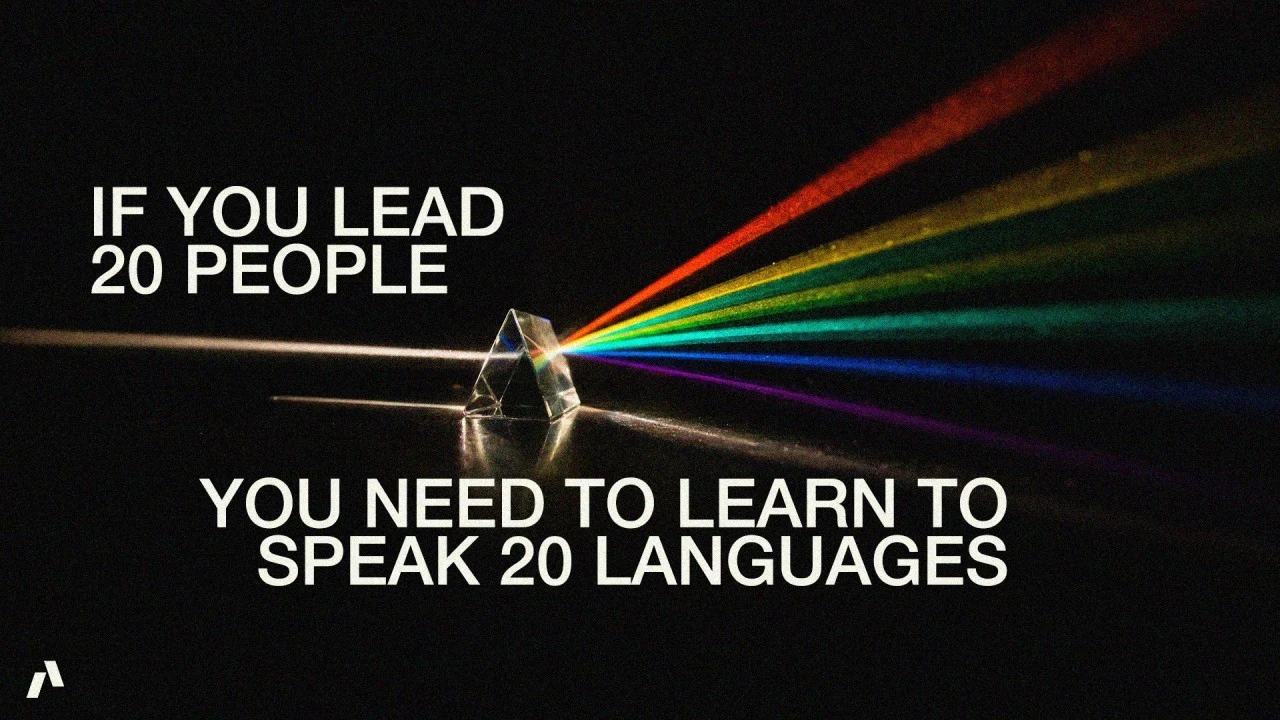
Picture a supervisor standing in front of a crew of 20 people, minutes before a critical activity. They all work for the same company, wear the same uniform, know the same procedures and sat through the same toolbox talk, with the same instructions. Even so, those 20 people do not listen in the same way, and that difference is exactly what many organizations let slip by. This is why I often say that a supervisor who leads 20 people needs to learn to speak 20 languages.
I am not talking about Portuguese, English or Spanish. The language here is the language of experience, of trust, of fear, of haste, of training, of culture and of motivation, and also the language of how each person reads risk, authority, recognition and consequence. Communicating, on this ground, is more than passing along information. It is producing understanding, and an understanding strong enough to guide the decision someone will make once the leader is no longer nearby.
This conversation takes place inside a very large problem. In 2023, the International Labour Organization estimated that nearly 3 million people die every year from work-related accidents and diseases, and that 395 million suffer non-fatal occupational injuries. These numbers do not come from a single cause, and it would be a simplification to pin them on communication. Even so, this is the setting in which every instruction given, every question left unasked and every leadership decision happens.

The Same Sentence. Twenty Interpretations.
Imagine that, before a task involving hazardous energy, the supervisor says, “Listen up today, everyone. This activity carries high risk. We are going to do everything according to the procedure.”
He spoke. But did he communicate?
The worker with 25 years of experience may be thinking, “I have been doing this for two decades. I know exactly what I am doing.”
The new hire may be thinking, “I did not fully understand, but I do not want to ask and look unprepared.”
Another one is worried about a problem at home, while a fourth wants to finish quickly because the crew is behind schedule. For the fifth, that speech is one more formality from the safety department. The sixth admires the supervisor and hangs on every word, and there is still the one who has heard the same message so many times that they stopped listening to it. One message was sent, and twenty different messages may have been received. That is the challenge of supervision.
What Amy Edmondson Helps Us See
Researcher Amy Edmondson defined psychological safety as the shared belief that the team is a safe place to take interpersonal risks, such as asking a question, admitting a doubt, pointing out a mistake or disagreeing with someone who holds more authority. In her original study, carried out with 51 teams in an industrial company, psychological safety was associated with learning behaviors, and those behaviors, in turn, were connected to team performance.
This changes the way we read silence. When new hires do not ask because they are afraid of looking incompetent, the problem may not be lack of interest. When experienced workers spot an abnormal condition and avoid contradicting the supervisor, the problem may not be lack of responsibility. And when everyone answers “yes” to the question “did you understand?”, it is possible that the agreement is not real. In many cases, silence is a response to social risk, the risk of being ridiculed, reprimanded, ignored, labeled as difficult or seen as the person who slows production down.
The concept does not rest on a single isolated study. A 2017 meta-analysis brought together 136 independent samples, more than 22 thousand people and almost 5 thousand groups, and found positive relationships between psychological safety and behaviors that matter for teams, such as information sharing and learning, as well as relationships with performance outcomes.
None of this means lowering standards, accepting carelessness or turning the workplace into somewhere without accountability. It means creating the conditions for people to speak up before the problem grows. In practical guidance for leaders, Edmondson sums up three decisive behaviors, which are acknowledging that work carries uncertainty, actively inviting people to contribute, and responding productively when someone brings a doubt, a disagreement or bad news.
“If there is no bad news, remember, it is not that bad news does not exist. It is that you are not hearing about it.” Amy Edmondson, in a free rendering.
For operational safety, that sentence should raise an uncomfortable question. If nobody questions anything, does it mean that everything is clear, or that people have learned to keep quiet?

The supervisor is a translator of meaning
For a long time we taught supervision as the ability to guide, hold accountable, direct and follow up on people. What is missing from that list is the skill of translating. The supervisor translates the company strategy into the reality of the operation, and the procedure into field decisions. He translates technical risk into human consequence and indicators into observable behavior. Above all, he translates the same message for different people.
Translating is not changing the rule to suit the person, nor treating the crew arbitrarily. There is one rule only, and the standard is the same for everyone. What can change, and often needs to change, is the example chosen, the question asked, the pace of the conversation, the demonstration in the field and the way of confirming that the person understood. Equal communication is not the same thing as effective communication.
So it is not enough to ask “did I explain it?”. We have to ask “did the person understand?”. And there is a third question, harder than the other two. Will what they understood be enough to guide their decision when they are alone in front of the risk?

The eight languages every supervisor needs to learn
There are not simply 20 different people on a crew. There are different ways of perceiving, interpreting and responding to the same message. In practice, eight of these languages show up again and again.
1. The language of experience
Experienced workers carry a valuable repertoire, because they have already seen failures, workarounds, changing conditions and situations that no procedure describes. That experience works as protection, although it can also produce overconfidence, and that is where “I have always done it this way and nothing ever happened” comes from.
With these professionals, repeating “be careful” rarely produces reflection. It works better to recognize what they know and invite them to examine what has changed.
“After so many years on this activity, what can still surprise you?”
“What is different today compared with the other times?”
“Which control usually looks strong but can fail?”
The point is not to test the veterans, but to use their experience without letting familiarity numb their perception of risk.
2. The language of those who are starting out
New workers face the opposite problem. They do not have a repertoire yet and, very often, do not know what they ought to know. To make it worse, they may be embarrassed to ask. With them, explaining is not enough, because the understanding has to be confirmed without embarrassing anyone.
In healthcare, the Agency for Healthcare Research and Quality recommends the teach-back method. Instead of asking “did you understand?”, the person is asked to explain, in their own words, what they need to know or do. The method starts from the responsibility of the one who explains, and not from the fault of the one who receives the message.
Adapted to the operation, the supervisor could say,
“I want to check whether I explained it well. Show me how you would start.”
“What is the critical risk of this step?”
“In what situation would you stop the activity?”
The difference shows up in the answer. “Did you understand?” produces a “yes”, while “show me how you would do it” reveals understanding, doubt and gaps.
3. The language of trust
There are people who only speak when they believe they will really be heard. If, every time someone points out a problem, the answer comes back defensive, wrapped in an impatient look or in the accusation of making the work harder, that person quickly learns to stay silent.
Trust is not built by the phrase “my door is always open”. It is built by the supervisor's reaction when someone finally walks through that door. Compare two answers to the same piece of news.
“This problem again? Why do you not sort it out?” or,
“Thank you for bringing this up before we start. What are you seeing that we have not looked at yet?”
Both say more than the words they use. The first punishes the voice, and the second turns that voice into a prevention barrier.
4. The language of consequence
Some people understand a rule only when they understand its purpose. Simon Sinek popularized this idea by arguing that leaders and organizations able to inspire start with the “why”, before focusing only on the “what” and the “how”. In safety, this is not about replacing technical controls with motivational speeches. It is about giving meaning to the control.
“Wear your seat belt” is an instruction. Saying “if the equipment moves unexpectedly, the seat belt is the barrier that keeps you from being thrown out” connects the instruction to the mechanism of the accident. “Apply the lockout” is a rule, and explaining that stored energy may remain even with the controls switched off, and that the lockout keeps another person from re-energizing the system while you are exposed, turns the rule into meaning.
People do not just need to know what to do. They need to understand why it matters, which failure the control prevents and what can happen if the barrier is not there.
5. The language of practice
Some people take things in better by seeing, and others by doing. For them, a written procedure or a slide presentation has limited reach as long as there is no connection with the field, and the supervisor needs to step out of the speech to carry the message into the real work.
That means showing where energy remains, pointing out the line of fire and simulating the stop. It means asking workers to identify the pinch point, to demonstrate the safe position and to compare the condition described in the procedure with the condition found on site. Communication then stops being talk about risk and becomes shared recognition of risk.
6. The language of pressure
This may well be the hardest language. When the operation is behind schedule, when there is pressure for production and everyone wants to finish quickly, the safety message has to compete with another one that is often more powerful, the message that we need to deliver. That is the moment when workers observe what the supervisor truly values.
If the leader repeats “safety first” but reacts badly when someone stops a task, the crew learns what the real priority is. If he asks first “how long will this delay us?” and only then “what risk was identified?”, he sets a hierarchy of values without having to announce it. Workers do not listen only to what the supervisor says. They read what the supervisor tolerates, demands, recognizes and rewards. Under pressure, the leader's behavior works like a subtitle, because it teaches the crew how to interpret every speech that came before.
7. The language of fear and hierarchy
Some workers do not disagree with the supervisor, and it is not because they agree. It is because the hierarchical distance makes disagreement dangerous. This is how false consensus is born, with everyone nodding, nobody questioning and the crew heading into the activity carrying doubts that stay invisible.
Edgar Schein called Humble Inquiry the practice of asking questions to which the leader genuinely does not know the answer, from a posture of curiosity rather than authority. Asking “everything is fine, right?” is very different from asking,
“What might I not be seeing?”
“Which part of this plan makes you least comfortable?”
“If we had to stop the task, what would be the most likely reason?”
The first question looks for confirmation, while the others look for information. A good supervisor does not just say “if you see something, speak up”. He opens space, asks genuine questions and proves, by the way he reacts, that disagreeing respectfully is safe behavior.
8. The language of the person
There is, finally, a language that fits into no procedure, which is the individual one. The history of each worker, their experience, their way of learning, what worries them, what motivates them, what makes them pay attention and the relationship they have built, or not, with the person who leads them. Knowing the crew is not a peripheral courtesy of leadership. It is part of the ability to communicate accurately.
One professional responds better to a demonstration, another to a question and a third needs to understand the consequence, while there are those who first need to feel that they can admit a doubt without being judged. The message stays true for everyone. What can be different is the path to understanding.

The supervisor's behavior also speaks
Imagine that, for months, the supervisor repeats that “safety always comes first”. Then, one day, the crew runs into an unexpected condition and decides to stop the activity. The supervisor looks at the clock and asks,
“But how long is this going to delay us?”
He may not even notice it, yet in that instant he sent a message more powerful than dozens of toolbox talks, because the crew observes priority, reaction, facial expression, recognition and pressure, and above all observes what happens when safety and production come into conflict. The supervisor's behavior also speaks, and it often speaks louder.
This is why communication in safety cannot be treated as a secondary behavioral skill. It shapes risk perception, the confidence to stop a task, the willingness to report a deviation and the ability to turn a procedure into a decision. When someone notices a dangerous condition and says nothing, there is a communication barrier to investigate.
When someone does not understand the severity of a hazardous energy, there is a gap in understanding. And when someone perceives the risk but concludes that production comes first, there is a leadership message at work. In safety, communication is part of the prevention system.
The question that changes communication
We often hear that “I already told him”, that “this was covered in the toolbox talk”, that “he received training” or that “it is written in the procedure”. All of these statements can be true and, even so, communication may have failed, because information made available is not necessarily information understood, information understood is not necessarily information remembered, and information remembered is not necessarily information used at the moment of a decision.
So the supervisor may need to change the question he asks before speaking. Instead of starting with “what do I need to say?”, start with “who needs to hear this?”. Who is this person, what is their experience, how do they perceive this risk? Do they trust me? Do they feel safe enough to say that they did not understand, would they have the courage to contradict me, would they stop the activity if they noticed something wrong? What demonstration or example would create meaning for them?
Twenty people | Twenty languages
There may be a single procedure, a single policy, a single rule, a single task and a single corporate message. In front of the supervisor, however, there are 20 histories, 20 repertoires, 20 experiences and 20 ways of interpreting what is being said. If you lead 20 people, learn to speak 20 languages. Not to change the truth of the message, to soften the standard or to replace technical controls with good intentions, but to increase the chance that the message reaches the other person, is understood and turns into safe action.
The test of communication does not happen when the supervisor finishes speaking. It happens a few minutes later, when the worker is in front of the risk, has to make a decision and the supervisor is not beside them. That is the moment when we find out whether the message was merely said or truly understood.
See you!
Would you like to learn more about my work? Purchase my books at the links below.
- Safety Leadership: http://bit.ly/44kFy2Z
- Antifragile Leadership: http://bit.ly/4ni6kBM
- 80 Ways to Expand Risk Perception: https://amzn.to/3VbWlAV
- Safety Culture: https://bit.ly/3x8IDXm
- Safety Culture Diagnosis: https://amzn.to/3XfnBkt
🧠 Follow me, Andreza Araújo , for more on EHS and leadership.
♻️ Repost this if you think it can help someone in your network!