Share on LinkedIn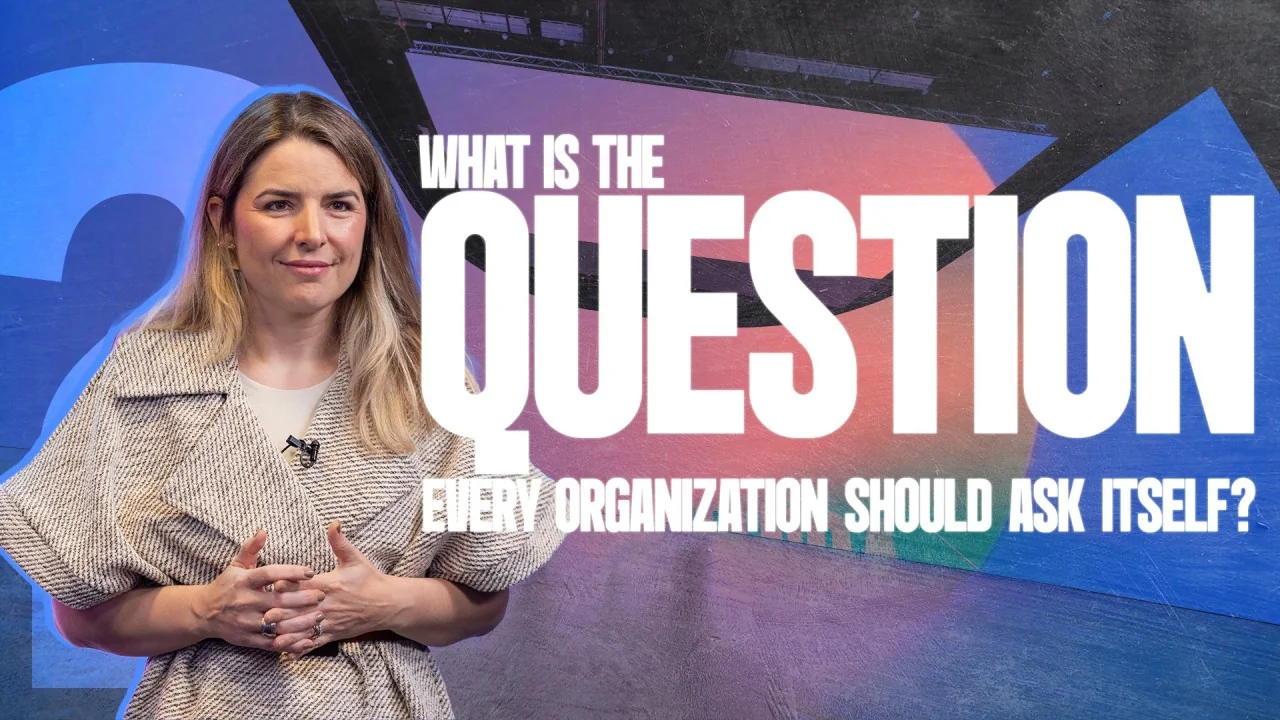
Every organization says it wants to be safe. But few take the time to honestly reflect on what that statement truly demands in daily practice. Between targets, audits, indicators, and recurring incidents, there is a simple yet decisive question that can reveal the real level of cultural maturity of any company.
What kind of organization do we want to be when it comes to safety, and how far are we truly willing to go to get there?
This question works like a mirror. It exposes beliefs, priorities, contradictions, and above all the consistency, or lack of it, between what the organization says and what it actually does.
Because safety maturity is not born from speeches. It is born from alignment between intention and behavior, especially when doing the right thing requires time, investment, deep adjustments, or organizational discomfort.
What do we truly want to be?
Many companies respond quickly. We want to be a zero-accident company.
But a goal without reflection becomes a slogan. And slogans do not sustain difficult decisions.
The more honest question is this. What capabilities, choices, and behaviors are we building today so that this goal can become possible tomorrow?
Safety is not a destination. It is a living system. And living systems are shaped by small, consistent elements.
- The conversations that happen, or do not
- Deviations tolerated because it has always been this way
- Urgency that turns into method
- Exceptions that become the rule
- Invisible decisions that quietly accumulate
Where do we want to be on the maturity journey?
Models such as Hearts and Minds by Hudson, the Bradley Curve by DuPont, and approaches focused on culture and leadership all point to the same conclusion. Maturity is not achieved through good intentions, but through consistent choices.
In mature cultures, you see more.
- Shared responsibility rather than delegated responsibility
- Role-model leadership instead of policing leadership
- Processes that make the safe choice the easiest choice
- Continuous learning rather than purely corrective actions
- Active listening instead of rushed judgment
- Systems that support individuals without relying solely on them
And here is an important detail. When the questions evolve, the culture evolves.
Every organization sits at the level of maturity its questions allow.
- Reactive organizations ask. Who made the mistake?
- Dependent organizations ask. Are we following the procedure?
- Independent organizations ask. What can I do better?
- Interdependent organizations, the highest level, ask.
- How do we take care of one another?
- How do we learn together?
- What conditions must the system provide so that no one gets hurt?
This is where James Reason’s perspective becomes impossible to ignore. Events do not begin at the moment of the accident. They begin earlier, in decisions, pressures, priorities, and compromises accumulated over time.
The defining question
After all of this, the question that truly defines the future is this.
Is the safety culture we have today strong enough to prevent the worst tomorrow?
- If the answer is I do not know, that is the beginning of the journey.
- If the answer is no, that is the call to action.
- If the answer is yes, look deeper, because mature cultures are never satisfied with the first answer.
Maturity grows in the depth of the questions, not in the speed of the answers.
Conclusion
The right question does not bring comfort. It brings awareness.It does not describe the company the organization claims to be, but the one it is truly willing to become.
And every organization that wants to build a mature culture must choose which question will guide its future.
👉 A question that excuses or 👉 a question that transforms
Which question dominates your organization today?
Would you like to learn more about my work? Purchase my books at the links below.
- Safety Leadership: http://bit.ly/44kFy2Z
- Antifragile Leadership: http://bit.ly/4ni6kBM
- 80 Ways to Expand Risk Perception: https://amzn.to/3VbWlAV
- Safety Culture: https://bit.ly/3x8IDXm
- Safety Culture Diagnosis: https://amzn.to/3XfnBkt
🧠 Follow me, Andreza Araújo , for more on EHS and leadership.
♻️ Repost this if you think it can help someone in your network!