Share on LinkedIn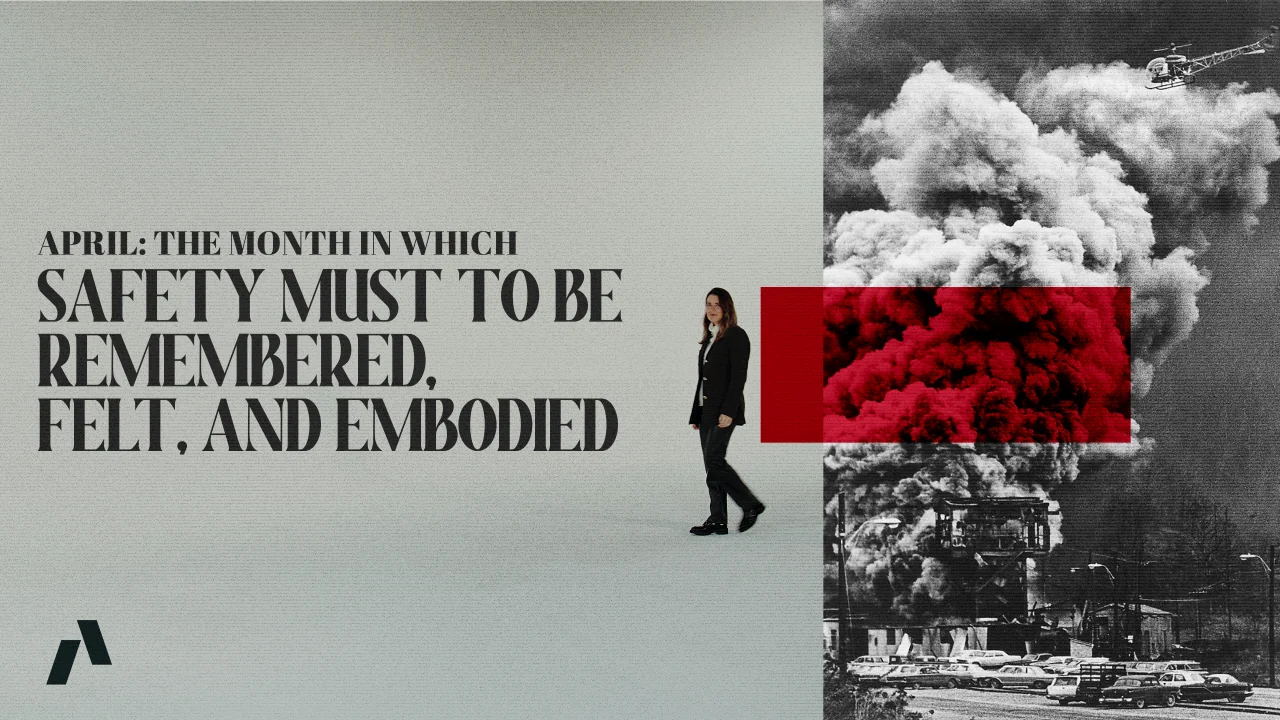
We are beginning April, a month that cannot go unnoticed by those who live safety in a deep and meaningful way. On April 28, the world observes the World Day for Safety and Health at Work, a date that the International Labour Organization (ILO) has internationally recognized to promote the prevention of occupational accidents and diseases [1]. This global mobilization is connected to an earlier remembrance led by the labor movement, also held on April 28, to honor victims of work-related accidents and illnesses.
But April 28 is not merely a date on the calendar. It is a call to conscience.
When we remember that this day exists to honor victims of work, it stops being an institutional agenda and becomes a moral summons. Because behind every number there is a name. Behind every statistic there is a family. Behind every accident there is an absence that can never truly be filled. The most recent ILO data reveals an alarming reality: nearly 3 million people die each year due to work-related accidents and diseases [2]. Every 15 seconds, a worker loses their life as a result of their labor activities [3].
That is why my connection to this day took on a different dimension when I was in West Virginia, learning firsthand about the history of Mine No. 9 in Farmington. In the early hours of November 20, 1968, a violent explosion killed 78 miners [4]. The tragedy, marked by corporate negligence and disabled safety systems, became a landmark in the history of mining safety in the United States. The national outcry drove unprecedented legal changes, culminating in the passage of the Federal Coal Mine Health and Safety Act of 1969, which established rigorous inspections and penalties for violations, forever transforming worker protection [5].
Being there was not only a technical experience. It was a profoundly human one.
You do not visit a place like that only through the eyes of an engineer. You also visit it with the heart of a daughter, with the sensitivity of a mother, with the responsibility of a professional who chose to dedicate her life to building safer environments. There are places that do not merely tell a story, they confront us. And Mine No. 9 confronted me with something very simple and very powerful: safety is not a speech, safety is the consequence of choices, omissions, priorities, and courage.
That ground, so heavily marked by memory, reminded me that safety only makes sense when it stops being an external demand and becomes an internal conviction. When it is felt, not merely repeated. When it touches the individual before it reaches the indicator. When it reaches conscience before it appears in a procedure.
Perhaps one of the greatest traps in the field of safety is believing that we have already seen enough, that we already know enough, that we already understand everything that needed to be understood. No. Those who work in safety must carry the mindset of a learner. They must recognize, with humility, that there are still pains they have not lived, stories they have not heard, realities they have not yet known. And it is precisely this posture that keeps us alive on the inside, attentive, sensitive, vigilant, and open.
Because the truth is this: we do not know everything. We have not lived everything yet. And precisely because of that, we must keep learning.
April 28 reminds us that safety cannot be treated as a bureaucratic routine, nor as a seasonal topic. It must be lived as an ethical responsibility. As respect for life. As a non-negotiable commitment to everyone who leaves home to work and deserves to return.
Today, when I look at this date, I see it with more depth than before. I see the victims. I see the families. I see the silences left behind by tragedies that could have been prevented. And I also see our duty: to transform memory into awareness and awareness into action.
That is why, in this month of April, I want to invite you to get to know the work I developed based on Mine No. 9. Not merely to revisit a historic accident, but to reflect on what this day truly means. Because real safety, in order to transform, must first be felt.
And perhaps that is exactly where everything begins.
Until next time!
Andreza Araújo
References
[1] International Labour Organization (ILO). “World Day for Safety and Health at Work.” Available at: https://www.ilo.org
[2] International Labour Organization (ILO). “Nearly 3 million people die due to work-related accidents and diseases.” 2023.
[3] ECOcalendar. “April 28 - World Day of Safety and Health at Work.” 2025.
[4] Mine Safety and Health Administration (MSHA). “Mine Disaster: 1968 Farmington Explosion Anniversary.”
[5] United States Department of Labor. “Federal Coal Mine Health and Safety Act of 1969.”