5 Whys vs Fault Tree vs Fishbone: Which Method Fits a Serious Incident Investigation?
A serious incident investigation needs a method that matches the decision, evidence, and consequence. Compare 5 Whys, Fault Tree Analysis, and Fishbone Diagrams, then choose the right starting point without mistaking a polished diagram for proof.

Key takeaways
- 01Choose the investigation method by the decision it must support, not by habit or workshop familiarity.
- 02Use 5 Whys for a bounded causal chain, while testing every answer against evidence and resisting false linearity.
- 03Use Fault Tree Analysis when combinations, dependencies, and engineered or procedural safeguards shape the top event.
- 04Use a Fishbone Diagram to explore cross-functional hypotheses, then test those hypotheses before calling them findings.
- 05Close the investigation with an accountable control decision and field verification, because a report alone does not reduce exposure.
F3 deep comparative for EHS managers, investigation leads, and operations executives
A serious incident investigation can produce a polished report and still leave the organization unable to decide what must change. The problem often begins before the first interview, when the team selects a familiar method instead of the method that matches the decision it needs to make.
The 5 Whys, Fault Tree Analysis, and Fishbone Diagram are not competing brands of the same exercise. The 5 Whys follows a selected chain of causation, Fault Tree Analysis tests how combinations of conditions can produce a defined top event, and the Fishbone Diagram organizes possible contributing factors across categories. The right choice depends on the event, the evidence, and the decision that must survive review.
This comparison helps an EHS manager choose a method without turning the investigation into a ritual. It also adds a safeguard that every method needs, namely a final check that separates documented causes from assumptions and connects findings to controls that can be verified in the work.
Evaluation criteria: what must the investigation decide?
The first criterion is the question. A supervisor reviewing a minor process deviation may need a fast explanation of one causal chain. A technical team examining a high-consequence event may need to test how several failures combined. A leadership group may need a broad map of contributing conditions before it decides where to invest, redesign, or escalate.
The second criterion is the evidence boundary. An investigation should state what is known, what is inferred, and what remains untested. James Reason's work on organizational accidents is useful because it shows why an operator action rarely explains an event by itself. Decisions, supervision, maintenance, design, workload, and defenses can align before harm occurs, which means the method must keep system conditions visible without turning every possible factor into a finding.
The third criterion is action quality. A report is stronger when each finding has an owner, a decision date, and a way to verify whether the proposed control works. Andreza Araújo's Safety Culture Diagnosis: Learn how to do your own reinforces this distinction because a diagnosis should expose how the organization makes and follows through on decisions, not only how well it completes a workshop.
Use the following comparison when the team is deciding whether it needs a narrow causal trace, a logical model of combinations, or a wide exploration of contributing conditions. If the event is potentially life-altering, involve people who understand the work and preserve evidence before choosing the technique.
5 Whys: best for a bounded causal chain
The 5 Whys works best when the team can define one problem clearly and follow a sequence of conditions that led to it. The method is accessible, fast to explain, and useful in a first review when the immediate question is why a control failed at a particular point in the task.
Its strength is disciplined questioning. Each answer should be tested against evidence instead of accepted because it sounds plausible. If a team says that a worker made an error, it should ask what conditions made that action likely, what information was available, how the task was designed, and which supervision or control decision allowed the exposure to remain.
Its weakness is false linearity. Serious incidents rarely have only one chain, and a team can stop at a convenient answer if the fifth question becomes a slogan rather than an evidence test. The method also becomes unreliable when the starting problem is vague, when different teams silently use different meanings of “why,” or when the facilitator treats five as a required number rather than a prompt to reach a defensible control decision.
Choose 5 Whys when the event boundary is narrow, the evidence is reasonably direct, and the organization needs a practical explanation that can be checked quickly. Do not use it alone when several independent conditions may have combined to create a high-consequence event. In that situation, its chain can become one branch of a larger analysis.
Fault Tree Analysis: best for combinations that produce a top event
Fault Tree Analysis starts with an unwanted top event and works backward through logical relationships that can produce it. The team can represent combinations through AND and OR gates, which makes the method useful when the event requires several failures, when safeguards interact, or when leaders need to understand how independent weaknesses can align.
This method is particularly valuable for process safety, engineered protection, emergency systems, and other contexts in which a failure depends on equipment, human action, instrumentation, maintenance, or organizational conditions occurring together. The logic forces the team to define the event precisely. “Loss of control” is too broad, while “uncontrolled release of flammable material from the transfer line during loading” gives the analysis a usable boundary.
The main risk is technical overconfidence. A neat tree can suggest more certainty than the evidence supports, especially when basic events are treated as independent without proof. The team should record assumptions, dependencies, common-cause failures, and conditions that could defeat several barriers at once. The tree is a reasoning model, not proof that a probability has been measured.
Choose Fault Tree Analysis when the decision concerns combinations, dependencies, or the reliability of engineered and procedural safeguards. Pair it with field verification because a branch marked “protection available” is only a claim until inspection, testing, maintenance evidence, or operating records support it. A visual model becomes useful when it changes a design, a proof-test interval, an alarm response, or a barrier owner.
Fishbone Diagram: best for broad factor exploration
The Fishbone Diagram, also called an Ishikawa diagram, helps a team explore contributing factors across categories such as people, process, equipment, materials, environment, and management. It is useful at the beginning of an investigation when the group needs to widen the lens before it decides which hypotheses deserve deeper testing.
Its practical advantage is participation. People from operations, maintenance, engineering, training, and supervision can add factors without needing to understand formal logic notation. That breadth can reveal an interface problem that a narrow causal chain misses, such as a procedure that conflicts with the actual sequence of work or a maintenance decision that changes the available protection.
Its weakness is that a completed diagram can become a catalogue rather than an investigation. A category is not a cause, and a possibility is not a finding. The facilitator should ask what evidence supports each item, whether the factor was present before the event, how it influenced the exposure, and which control or decision should change as a result.
Choose the Fishbone Diagram when the initial evidence is incomplete, the event crosses functions, or the team needs a structured way to surface hypotheses before prioritizing them. Follow it with interviews, document review, site checks, or a more formal causal method. Without that second stage, the diagram may look comprehensive while leaving the organization unsure what to fix.
Method selection should also reflect the quality of the evidence available at the time. Early in an investigation, the team may know the outcome but not the sequence, which makes a broad exploration safer than a fast conclusion. Later, once records, interviews, and physical evidence have narrowed the possibilities, a causal chain or logic tree can test the explanation with greater discipline.
That timing matters because an investigation can create its own blind spot. Once a manager hears a plausible explanation, subsequent evidence may be interpreted as confirmation, especially when the explanation protects a familiar process or avoids a difficult investment. The facilitator should therefore invite disagreement, mark unresolved questions, and show which conclusion would change if one assumption proved false.
A useful review also distinguishes the event mechanism from the management response. The mechanism explains how exposure became harm. The response decides what must change in design, work planning, competence, supervision, maintenance, or escalation. Keeping those questions separate prevents the report from stopping at a description of what happened.
Decision matrix: which method fits the investigation?
| Decision need | Best starting method | What it reveals | Primary caution |
|---|---|---|---|
| Explain one bounded control failure | 5 Whys | A traceable chain from the problem to conditions that can be changed | Do not force a single chain when several paths contributed |
| Test combinations and dependencies | Fault Tree Analysis | Logical relationships that can produce a defined top event | Record assumptions and common-cause failures |
| Explore cross-functional contributors | Fishbone Diagram | Hypotheses across work, equipment, process, and management conditions | Do not treat categories or untested ideas as findings |
| Prepare an executive control decision | Combine methods | A broad cause map, a tested chain, and a clear control boundary | Keep the final report focused on decisions and verification |
The matrix does not mean that one investigation must use only one tool. A Fishbone Diagram can open the exploration, 5 Whys can test a specific branch, and Fault Tree Analysis can examine the combination that makes the event severe. The sequence is justified when each method answers a different question and the team prevents duplicate speculation.
Leaders should also ask whether the investigation changed the operating system. The related evidence chain review helps test whether a conclusion is supported, while the evidence-preservation decisions protect the quality of the analysis before memory and assumptions harden.
Recommendation by context: match the tool to the consequence
For a low-consequence deviation with a clear boundary, start with 5 Whys and require one independent evidence check for every major answer. For a serious injury potential or major-accident scenario, start with a broad factor review, define the top event, and use Fault Tree Analysis where combinations and dependencies matter. For a cross-functional event with incomplete information, use Fishbone to create hypotheses, then narrow the report to the factors that evidence and control logic support.
Executives should not judge the investigation by the diagram, the number of pages, or the familiarity of the method. Judge it by whether the report identifies a decision, names the accountable owner, explains the assumptions, and shows how the new or strengthened control will be verified. That is the point at which an investigation stops being a narrative about the past and becomes a safer decision about the next shift.
Andreza Araújo's Make The Difference: Be a Leader in Health & Safety offers the right leadership test for this work. A leader does not merely approve the report. The leader makes sure the organization can see what changed, who owns it, and what evidence will show whether the change is holding.
For high-consequence work, the final review should be independent of the person who owned the original decision. Independence does not require a distant auditor. It requires someone with enough authority and technical understanding to challenge the chain, inspect the evidence, and ask whether the proposed action reduces the exposure that made the event possible.
What to do after selecting the method
- Define the event and the decision the investigation must support.
- Preserve physical, digital, and testimonial evidence before conclusions form.
- Choose the narrow, logical, or exploratory method that fits the question.
- Separate facts, assumptions, hypotheses, and confirmed contributors.
- Assign each control change to an owner with a verification date.
- Review whether the control works in the field, not only whether the action was closed.
A method is only as good as the decision it improves. When the team selects the tool because it fits the evidence and consequence, the investigation becomes more defensible, more useful to leaders, and less likely to reduce a complex event to the last visible action.
Frequently asked questions
Is 5 Whys enough for a serious incident investigation?
When should an investigator use Fault Tree Analysis?
What is the main limitation of a Fishbone Diagram?
Can these investigation methods be combined?
How should leaders judge an incident investigation report?
About the author
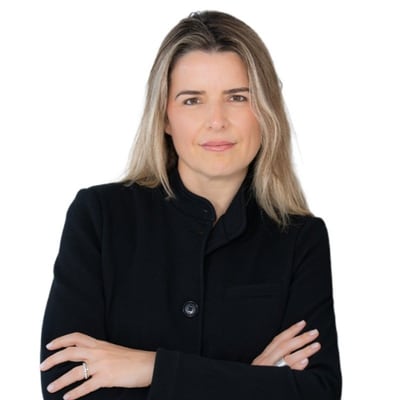
Andreza Araújo
Safety Culture Expert | Senior EHS Executive
Andreza Araújo is a safety culture expert and senior EHS executive with more than 25 years of experience in environment, health and safety. She is a Civil Engineer and Occupational Safety Engineer from Unicamp, holds a Master's degree in Environmental Diplomacy from the University of Geneva, and completed sustainability studies at IMD Switzerland. Andreza has served in Global Head of EHS roles in Fortune 500 environments, leading cultural transformation programs across multinational operations. She has represented Brazil as a speaker at the United Nations in Paris and has spoken at the International Labour Organization in Turin. She is the author of more than 16 books on safety culture in Portuguese, Spanish, English and German. Her work has earned more than 10 EHS awards, including two recognitions from Indra Nooyi, former PepsiCo CEO.
- Civil & Safety Engineer (Unicamp)
- M.A. Environmental Diplomacy (University of Geneva)
- Sustainability Cert (IMD Switzerland)
- People Management & Coaching (Ohio University)
- UN Paris speaker representative for Brazil
- ILO Turin speaker
- LinkedIn Top Voice
- Indra Nooyi PepsiCo CEO recognition (2x)
Documentaries
Watch Andreza's documentaries
Three productions on safety culture, organizational failure and the human lessons behind major disasters.
Podcasts
Listen to Andreza's podcasts
She hosts three shows on safety leadership, EHS and organizational culture, in English and Portuguese.